
What Your Everyday Shoes Might Be Doing to Your Feet
Cushioned, narrow and slightly raised at the heel: the shoes most of us wear every day may be quietly changing how our feet work. Here is what to look for instead.
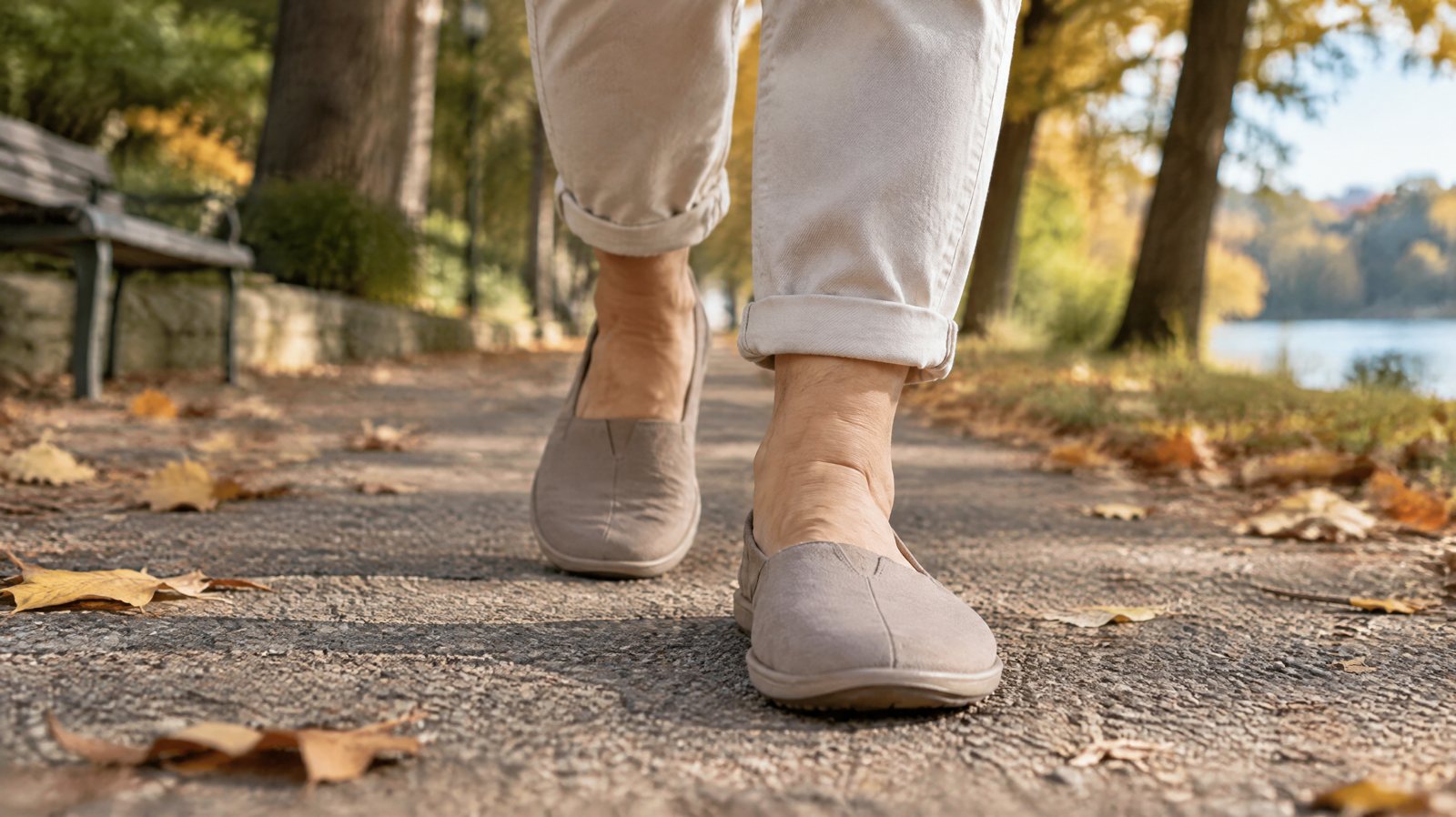
Take off your shoes and look at the shape of your foot. Now look at the shape of the shoe. For many of us, the foot is widest at the toes, while the shoe is narrowest exactly there. Over years and decades, that mismatch adds up.
Three common features worth a second look
A tapered toe box. Pointed or narrow fronts press the toes together. Over time this can contribute to bunions and hammertoes, and it limits the big toe's role in balance and push-off.
A raised heel. Even a modest heel shifts weight toward the ball of the foot and changes posture up the chain. Many everyday sneakers and casual shoes have more heel lift than people realize.
A thick, stiff sole. Cushioning feels comfortable in the store, but a sole that does not bend lets the small muscles of the foot do less work, and it dulls the feedback your feet send to your brain about the ground.
What to look for instead
- Room for your toes. You should be able to wiggle and spread them freely.
- A flat or nearly flat profile from heel to toe.
- A flexible sole that bends easily where your foot bends.
- A secure fit around the heel and midfoot, so your toes do not have to grip to keep the shoe on.
- Light weight, which matters more than many people expect on longer walks.
Making the switch gently
If you have worn cushioned, supportive shoes for most of your life, your feet and calves will need time to adapt to something more natural. Start by wearing flatter, more flexible shoes around the house and on short errands, then build up over several weeks. Pair the change with simple foot exercises and most people find their feet feel stronger and more capable.
The goal is not to throw out every shoe you own. It is to choose footwear that lets your feet do what they were designed to do, a little more often.
This article is for general information only and is not a substitute for advice from a podiatrist. If you have diabetes, neuropathy, a foot deformity or a recent injury, ask a professional which footwear is right for you.