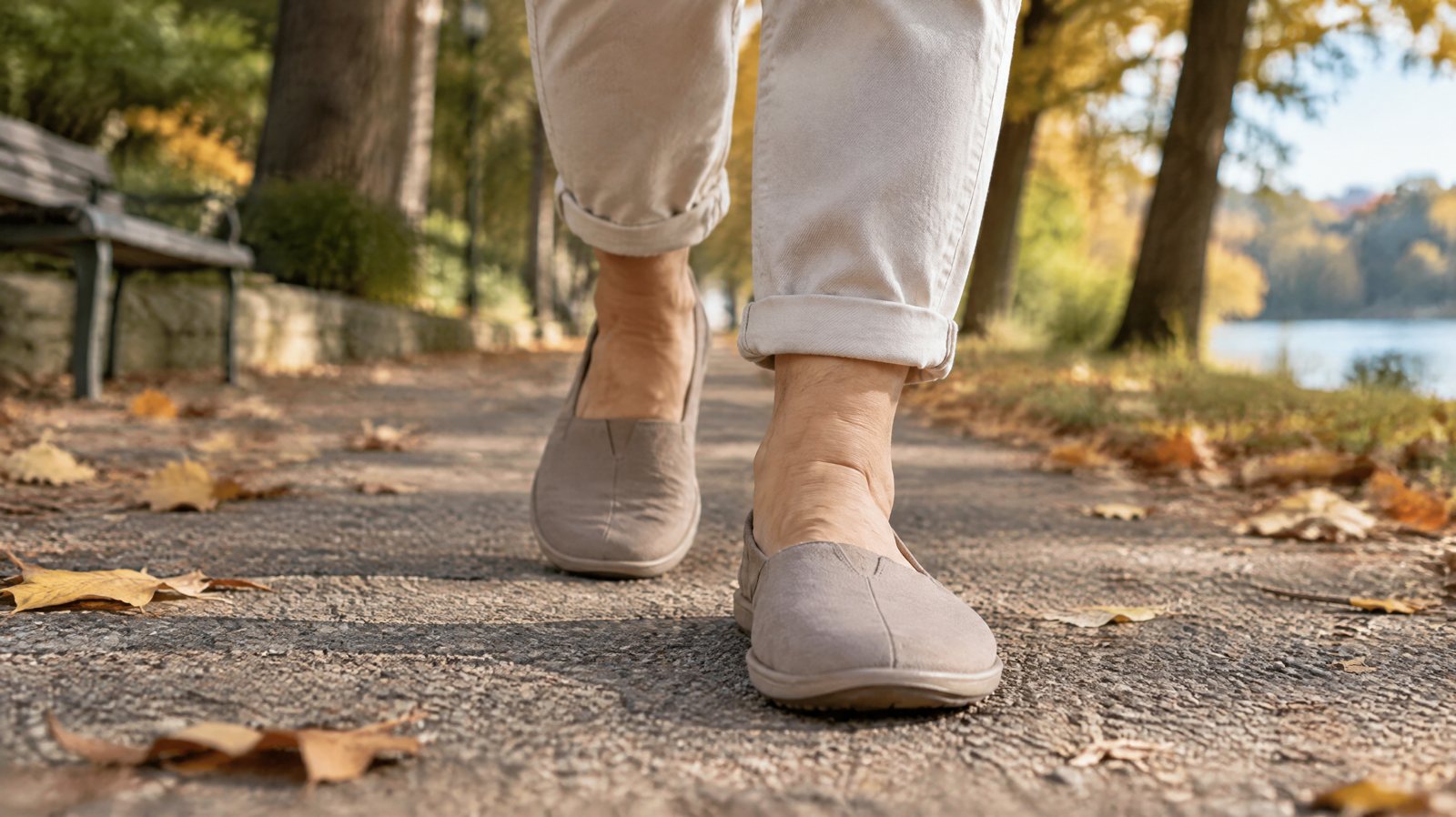
Your Feet Change After 50. Here's Why It Matters More Than You Think
Flattening arches, thinning fat pads and stiffer toes rarely get a mention at the doctor's office. They quietly shape how you walk, how you balance and how your knees and hips feel by evening.

Most of us notice the obvious signs of getting older: reading glasses, a stiffer back, a little more time needed to get going in the morning. Our feet rarely make the list. Yet they carry us roughly 4,000 to 8,000 steps a day, and by the time we reach our fifties they have absorbed the equivalent of several trips around the planet.
That mileage shows. And because the feet sit at the very bottom of the body's chain of joints, small changes there tend to travel upward, into the ankles, knees, hips and lower back.
What actually changes
The arches relax. The ligaments and tendons that hold up the arch gradually lose some of their elasticity. For many people the foot becomes slightly longer and wider, which is why a shoe size that fit for decades can suddenly feel tight across the toes.
The natural cushioning thins. The fat pads under the heel and the ball of the foot work like built-in shock absorbers. With age they become thinner and less springy, so the same walk on the same pavement can feel harder than it used to.
The small muscles weaken. Each foot has more than 20 muscles. The smallest ones, deep inside the sole, help stabilize every step. Years of supportive, stiff footwear mean many of them simply stop being asked to work.
The toes lose their spread. Narrow, pointed shoes slowly squeeze the toes together. Over time that can contribute to bunions, hammertoes and a weaker push-off when you walk.
Why it matters beyond your feet
Your feet are packed with sensory receptors that tell your brain where you are in space. When those signals get weaker, balance suffers, and falls become one of the leading causes of injury in adults over 65. A foot that cannot spread, grip or flex well also changes how force moves through the leg, which is one reason many people with aching knees or hips find relief once they pay attention to what happens below the ankle.
What you can do about it
The encouraging news is that feet respond to attention at any age. A few simple habits make a real difference:
- Spend some time barefoot at home each day, on safe, even surfaces.
- Try a few minutes of foot exercises, such as toe spreads and towel scrunches, while the coffee brews.
- Have your feet measured again. Many adults are wearing a size that no longer matches the shape of their foot.
- Look for footwear with room for your toes to spread and soles flexible enough to let the foot move.
- Check your feet regularly for redness, calluses or changes in shape, and mention them at your next check-up.
None of these changes require a big overhaul. Think of your feet the way you might think about your posture or your sleep: a foundation that quietly rewards small, consistent care.
This article is for general information only and is not a substitute for advice from your doctor or a podiatrist. If you have diabetes, circulation problems or persistent foot pain, speak to a professional before changing your routine.